
How to Create a Natural Sleep Ritual with Herbal Teas and Essential Oils
A good night's sleep rarely begins in bed. It begins an hour earlier, in a dim kitchen with the kettle on, and it is built from small, repeated things rather than one clever trick. Herbal tea and essential oils will not sedate you. What they can do is mark the edge of the day clearly enough that your body starts to recognise it. That is the whole idea: a ritual that says, quietly and in the same way every night, the working day is finished.
Why repetition works better than willpower
Your body does not read clocks; it reads sequence. A shower, a stretch, a warm cup, a few pages of a book — the exact order matters far less than the fact that it hardly changes from one night to the next.
Do the same three or four things in the same order for a fortnight and the first of them starts to feel like the beginning of sleep. You will notice it most on the nights you skip it, when something feels slightly wrong. That mild sense of missing a step is the sign the ritual has taken hold.
Keep it short. Twenty to forty minutes is plenty. Anything long enough to feel like a chore will be abandoned by Thursday, and it will take the tea down with it.
Set the room before you set the kettle
If you are winding down under bright ceiling lights with a phone in your hand, no blend of herbs will out-argue them. Deal with the room first.
- Lower the light. A lamp in the corner, a candle you will stay awake to blow out. Bright overhead light tells the brain it is midday.
- Cool the air. Most people settle more easily in a cool bedroom than a warm one. Open a window for ten minutes before bed, or turn the thermostat down a degree.
- Move the phone. Charging it in another room is the change that does the most work, because it removes the choice entirely. If you rely on it as an alarm, buy a cheap alarm clock and be done with it.
Choose two or three herbs, not ten
A shelf of twenty herbal teas is a hobby, not a ritual. Pick two or three, learn how they taste and how you feel the next morning, and let them become familiar.
- Chamomile — apple-sweet and gentle, and the most forgiving place to start. If it tastes thin to you, use more flowers and steep it longer.
- Lemon balm — bright and lemony, calming in the same soft way. It lifts chamomile out of blandness.
- Lavender — a pinch only, or the cup tastes of soap. For most people it works far better as a scent than as a drink.
- Passionflower — earthy and slightly grassy, traditionally used for a restless, circling mind. Often blended with chamomile.
- Valerian — the heavy one. Bitter, deeply earthy, and famously unglamorous in the cup. Some people find it useful; plenty find it does nothing at all.
Herbal teas are generally mild, but they are not automatically compatible with everything else you take. If you are on prescription medication — particularly sedatives or antidepressants — or you are pregnant, breastfeeding, or buying for a child, check with a pharmacist or GP before making one a nightly habit.
Brew it properly
Water and timing
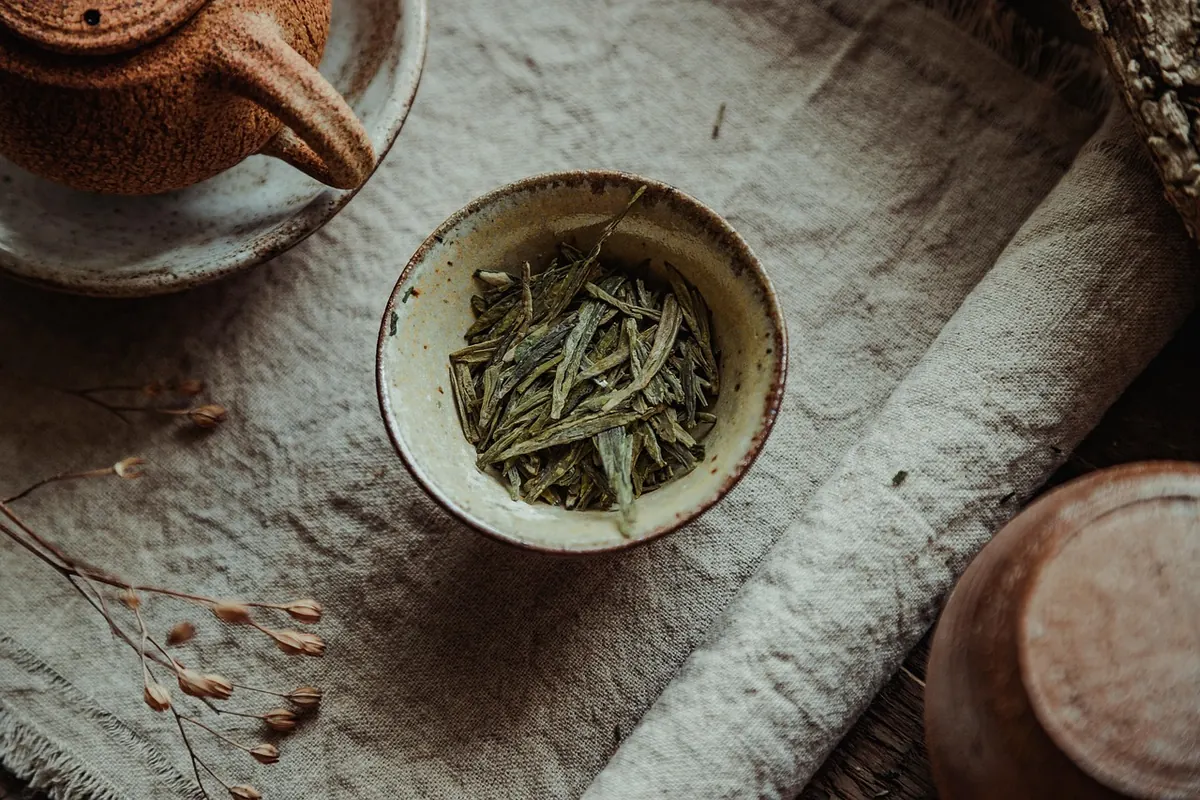
Boiling water poured straight onto delicate flowers scalds away much of the aroma. Let the kettle stand for a minute or two, then pour. Cover the cup while it steeps, using a saucer if you have no lid, because the useful part of chamomile and lemon balm sits in the volatile oils that drift off with the steam. Five to seven minutes, then lift the bag out or strain it.
Use a heaped teaspoon of dried flowers per mug, or a tablespoon of fresh. Weak tea sipped out of duty is a poor signal.
An evening blend worth keeping
Mix two parts dried chamomile, one part lemon balm and a small pinch of lavender — half a part at most — in a clean jar. One heaped teaspoon per cup. If you want more weight behind it, add a part of passionflower, or try valerian on its own for a week and see how you get on. Keep the jar out of the light and use it within a few months, while the scent is still strong when you open the lid.
Use essential oils as a scent cue
Lavender is the obvious choice and a good one, but it is not the only option. Cedarwood, sweet orange, bergamot and Roman chamomile all suit the end of the day. Bergamot and other citrus oils are best kept for evening use, as they can make skin more sensitive to sunlight.
- Diffuser: three to five drops, run for twenty to thirty minutes while you read or bathe, then switch it off. Not all night in a closed room.
- Pillow mist: ten drops of lavender in 100ml of water with a teaspoon of witch hazel or vodka to help it mix. Shake, mist lightly over the pillow, and let it dry before you lie down.
- Bath or footbath: four drops stirred into a tablespoon of carrier oil or a cup of milk first. Oil and water do not mix, and neat droplets on skin can sting.
- Wrist and foot massage: two drops in a teaspoon of sweet almond or jojoba oil, rubbed into the wrists or the soles of the feet.
Never swallow essential oils, keep them away from your eyes, and patch test on the inner arm a day before using a new one properly. If you share your home with a cat, a dog or a bird, diffuse in a room they can leave or skip it altogether — some oils are harmful to animals. Ventilate afterwards, and ask a pharmacist before using oils if you are pregnant, breastfeeding, or have asthma or sensitive skin.
A forty-minute wind-down to copy
- Phone on charge in another room. Lamp on, ceiling light off.
- Window open for a few minutes; heating down.
- Kettle on. Make the tea and drink it somewhere that is neither your desk nor your bed.
- Warm shower or bath — warm rather than scalding, so the cooling afterwards does its work.
- Three to five drops in the diffuser, or a light mist over the pillow.
- Ten minutes with a paper book, a notebook, or slow stretching on the floor. If your head is busy, write tomorrow's list on paper so it stops circling at two in the morning.
- Lights out at roughly the same time each night, weekends included where you can manage it.
Keep it boring, and know when to ask for help
Novelty is the enemy here. The ritual should be dull enough that you could do it half asleep, because that is precisely the state you are trying to teach your body to expect. Change one thing at a time, and give it two or three weeks before you decide whether it works.
If you are still awake twenty minutes after lights out, do not lie there getting frustrated. Get up, sit somewhere dim, do something quiet and uninteresting, and go back when you feel sleepy. Beds should be associated with sleep, not with lying awake and negotiating with yourself.
And if the ritual has made no difference after a month, or you are snoring heavily, waking gasping, or exhausted despite seven or eight hours in bed, see your GP. Persistent insomnia, sleep apnoea and thyroid problems all have treatments, and no herbal tea will fix them. Cutting caffeine after early afternoon and going easy on alcohol in the evening will do more for your sleep than any blend on this page — but the tea, made the same way at the same time each night, is a very good place to start.
Photo: mirkostoedter / Pixabay